
Seed ProBox Contamination Inspection
Every returning probox is inspected inside and out before a single seed goes in.
The challenge
A global agricultural seed producer ships bulk seed in proboxes, large plastic containers holding roughly 2,500 pounds each. Proboxes are expensive assets the plant reuses. They go out full, come back empty, and get filled again, over and over.
That recirculation is the whole problem. A probox can come back with anything in it: leftover seed from the last variety, dust, chunks of the box itself, or debris picked up somewhere between the customer and the plant. Fill a contaminated probox and you have mixed seed varieties, a quality non-conformance, and a product recall conversation nobody wants to have.
The only thing standing between a dirty probox and 2,500 pounds of seed was somebody leaning over the top and taking a look. On a moving fill line, thousands of times a season, that is not a check you can rely on.
What we built
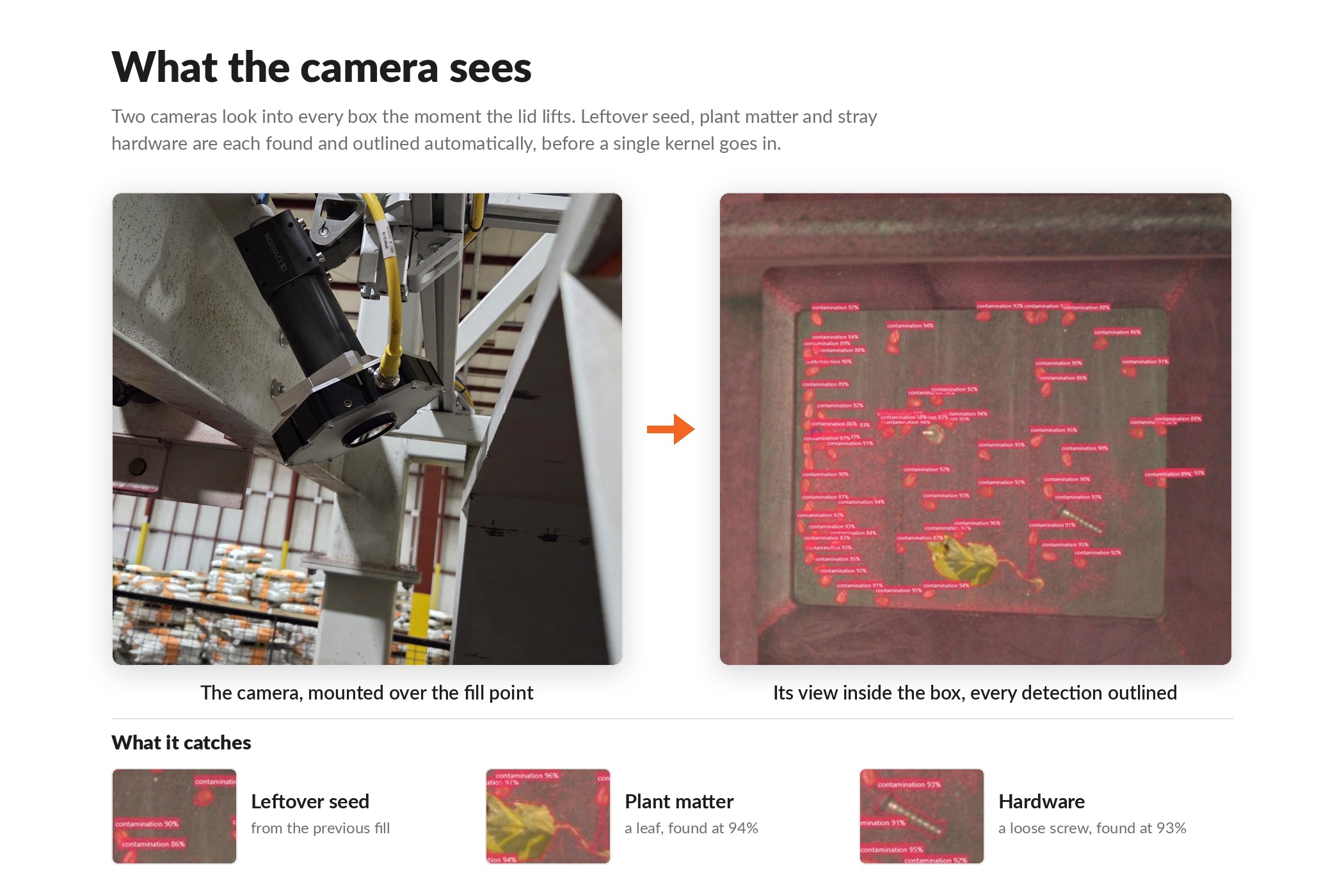
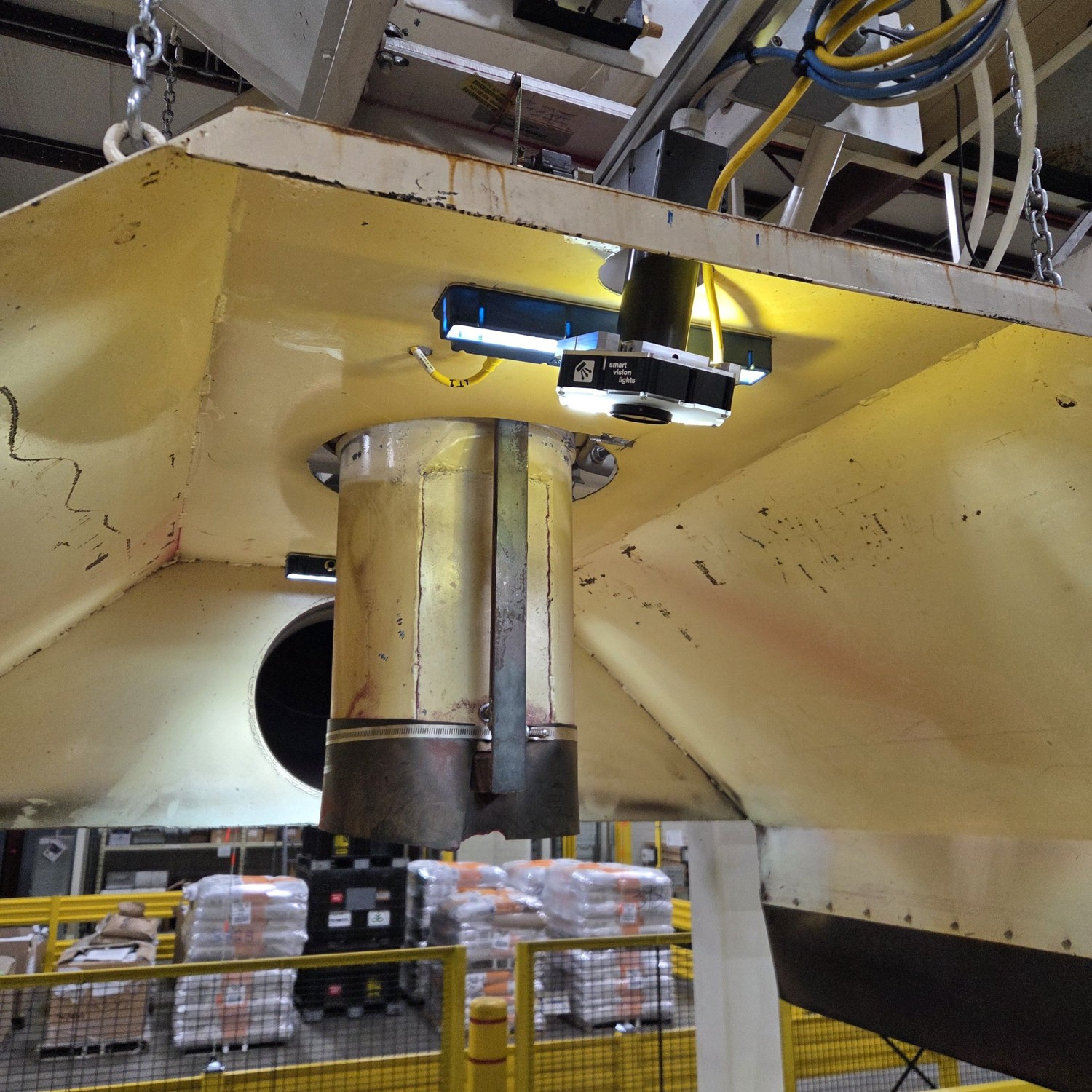
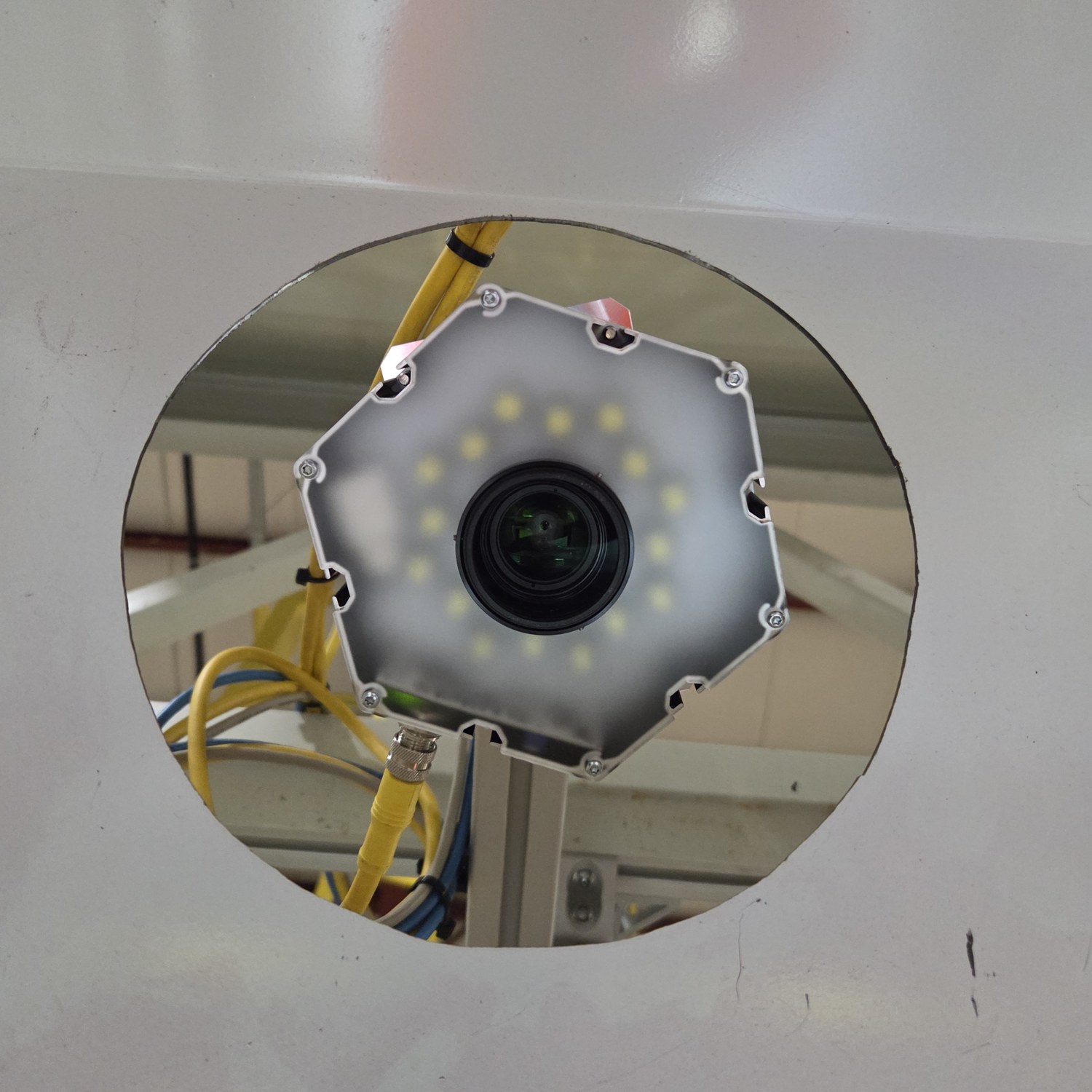
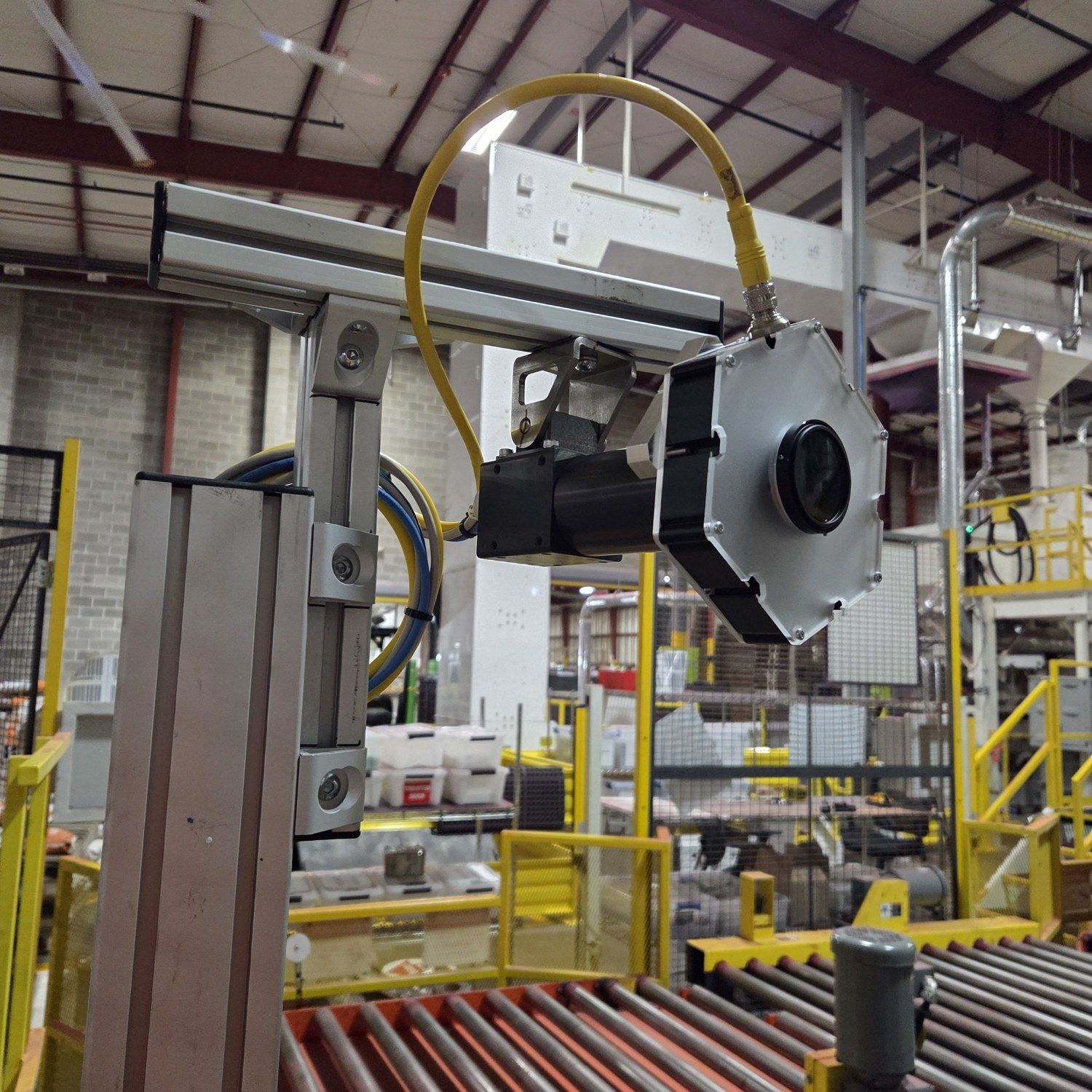
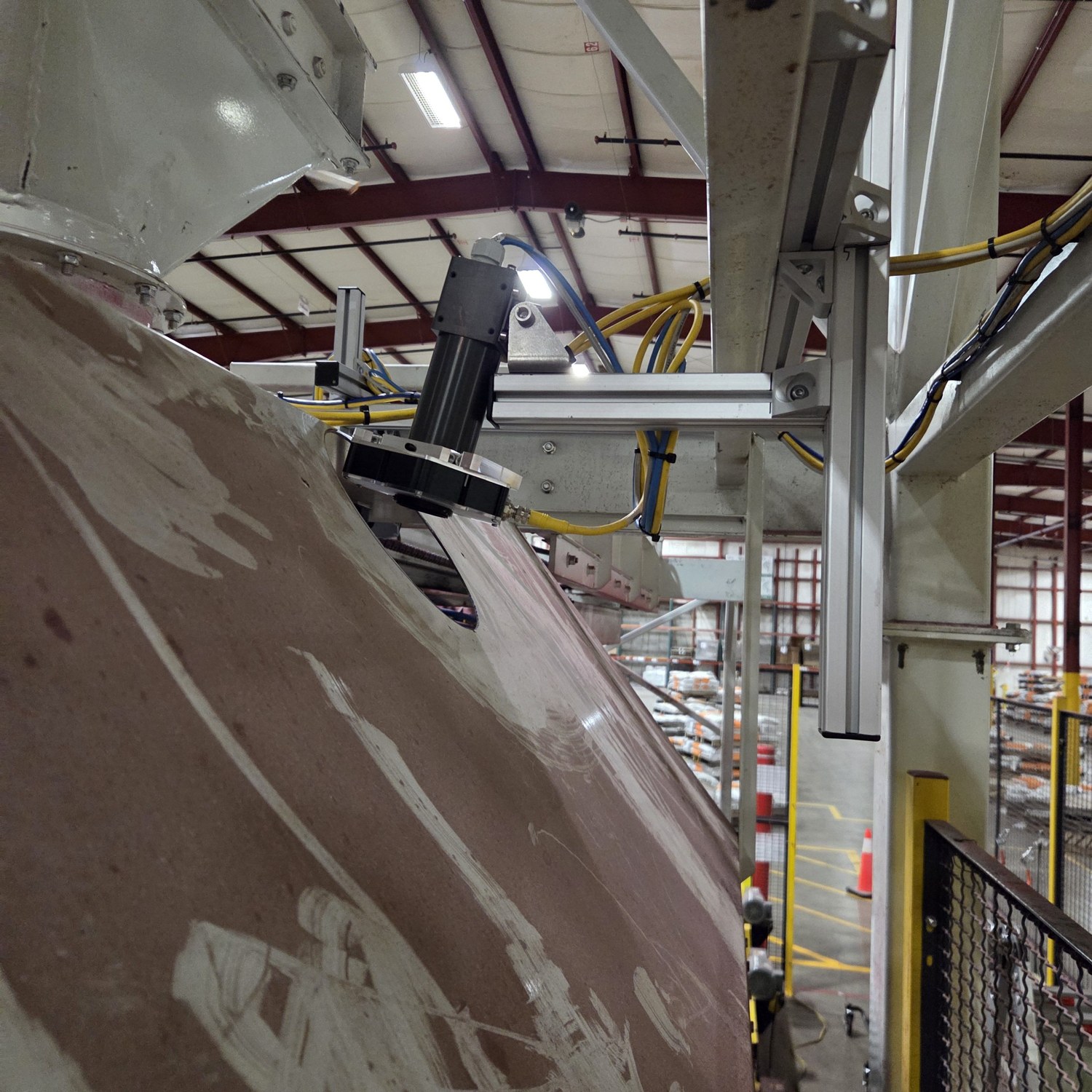
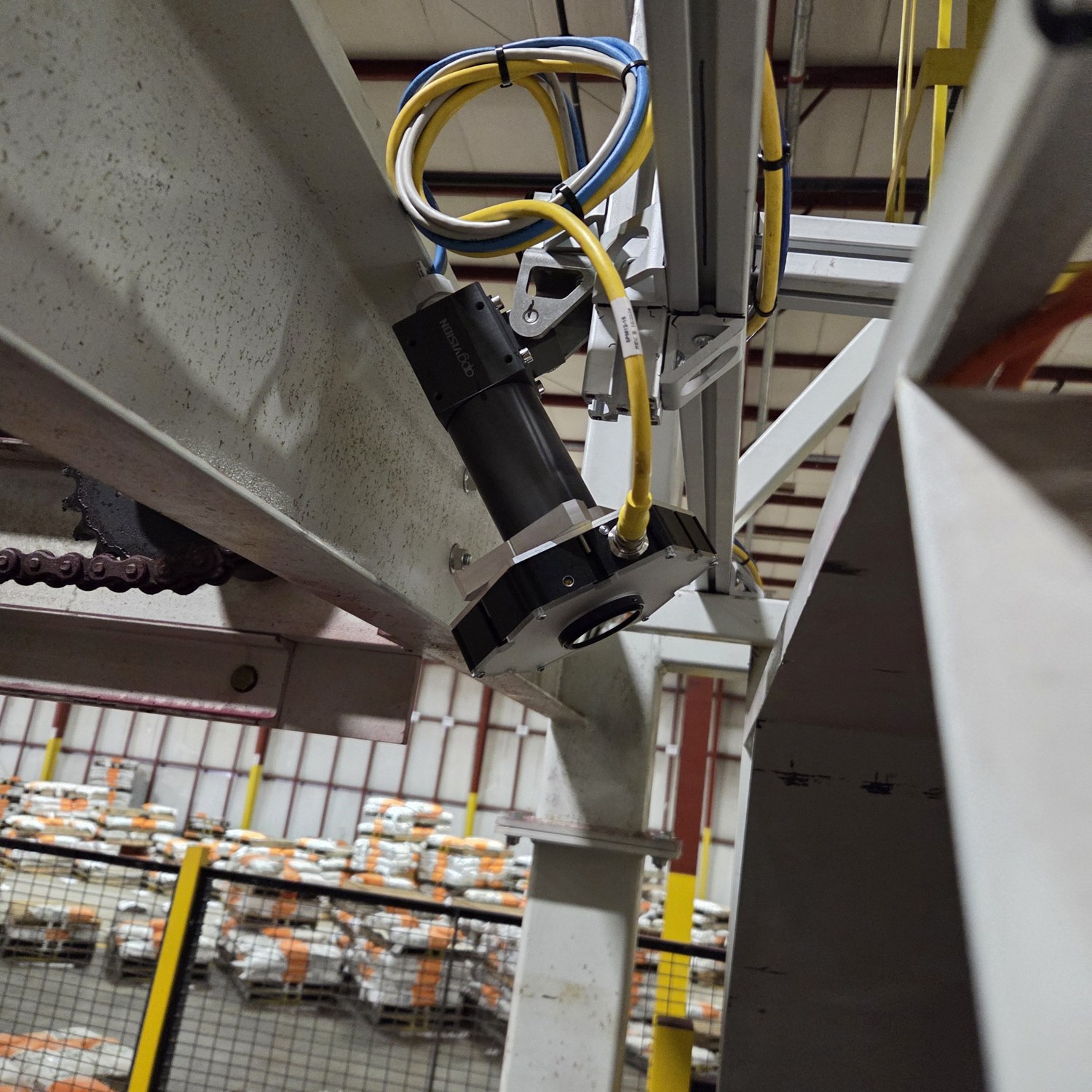
Each fill line carries five cameras. Three 20-megapixel cameras sit above the fill point, looking straight down into the probox the moment the existing gantry lifts the lid off. Two of them are color cameras that between them cover the entire interior, corner to corner, for physical contamination. The third is a UV camera that picks up what the other two cannot: treatment residue, invisible under normal light, left behind as fluorescent traces by treated seed. That is exactly the kind of cross-contamination that ruins an untreated fill. Two more 20-megapixel monochrome cameras read the probox's barcodes on the way through, confirming the probox is the one the system expects and keeping the inventory record honest before a single seed goes in it.
Taking the picture was the easy part. The difficulty was deciding what counts as contamination. The inside of a used probox is a mess of shadows, moulded ribs, scuffs, and stains, and none of that is a defect. A leftover seed sitting in a corner is. Writing fixed rules to separate those two things is a losing game, so we did not. We used SolVAI, our AI inspection platform built on a segmentation-based deep learning architecture, trained on real proboxes off the real line.
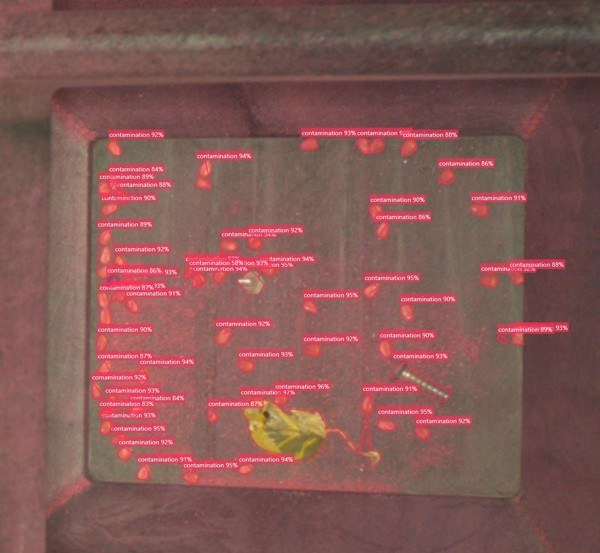
SolVAI does not score a probox against a clean reference image. It is trained to recognize specific object classes such as seed, hardware, paper, organic matter, and box fragments, and to draw a pixel-level outline around every instance it finds, each with its own confidence score. Because surface soiling, staining, and wear are not object classes, they are not flagged. A probox can be heavily stained, dusty, or worn and still pass cleanly, because there is nothing in it to detect. A dirty probox is not a failed probox, and that distinction is what keeps good product moving and false rejects off the operator's plate.
The UV camera's images run through the same pipeline for treatment contamination. A probox is cleared on both counts before it fills: nothing physical inside it, and no treatment residue left behind by the last load.
The system is wired directly into the line. A communications card ties the vision controller into the plant's existing Allen-Bradley PLC, and the fill is interlocked: until the inspection returns a result, the probox cannot be filled.
System at a glance
- Interior inspection3 × 20MP: 2 color (physical contamination), 1 UV (treatment contamination)
- Identification2 × 20MP monochrome barcode cameras for probox ID and inventory verification
- ProcessingIndustrial vision controller, GPU-accelerated SolVAI inference
- DetectionClass-based segmentation with per-instance confidence
- Operator interfaceLine-mounted HMI
- Enclosure & frameCustom, built in-house
How a probox moves through it
The probox arrives and the HMI shows live video, so the operator can watch the interior in real time as the gantry pulls the lid. The moment the lid is clear, the system switches from live video to a single captured frame and makes its call.
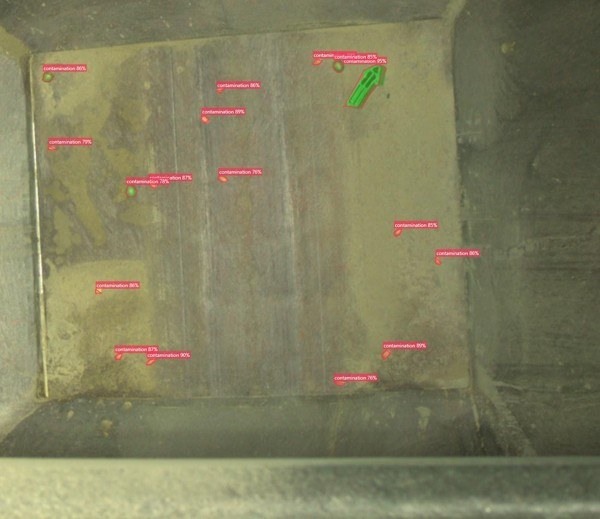
If the probox is clean, the HMI turns green, the fill button lights, and the operator starts the fill. If it is not, every piece of contamination is outlined on screen with a pixel-level mask, and the operator decides what it is: something that can be swept out, or a probox that needs to come off the line. Either way it is one button.
We also built in a way for the operator to disagree with us. If they believe the system has failed a clean probox, they can override it, but the override takes two confirmations, and every one is logged. The operator is never stuck fighting a machine having a bad day, and the machine never loses the argument quietly: every disagreement leaves a trail we can retrain from.
It gets better every season
Every inspection is archived: passes in one bucket, rejects sorted by the contamination type the operator picked. No line builds its own training set. Every line contributes to one shared, labelled dataset, so each additional system on the floor makes the training data deeper and the model behind all of them smarter.
We connect in remotely and use that shared archive to retrain the centralized model, so a contamination type first seen at one plant is caught at every plant after the next update. Refinements are pushed as lightweight model updates, not full retrains, and a new facility does not start from zero: the existing model is deployed on day one and begins producing results immediately, inheriting everything the earlier sites have already learned. The system now runs across multiple facilities and product lines, and that compounding is the reason each one comes up faster than the one before it. Across production sites, the system holds 95% contamination detection accuracy and 92% treatment detection accuracy.
Holding it to a number
Performance was agreed in writing before anything was built, and the system is validated against it on site: a false-positive rate under 10%, a false-acceptance rate under 1% for any object larger than a seed, and under two seconds of added cycle time so the fill point's throughput is not the price of the inspection. Acceptance runs as a 50-probox validation at install and a 100-probox test for final sign-off.
Capabilities used
Machine vision, AI-based segmentation and defect classification (SolVAI), controls integration into an existing PLC, custom UL508A panel fabrication, mechanical design and mounting, operator interface development, and multi-site deployment with centralized model training and remote support.
Photos
Something on your line you can't afford to miss?
Engineer-led, customer-direct, backed by 24/7 support.
(423) 567-3755Talk to an engineer